
You did everything right. You researched the best air purifier, paid good money for it, and changed the filter on schedule. And yet, you're still sneezing. Still waking up congested. Still dealing with symptoms that were supposed to be gone by now.
You're not alone, and you're not imagining it. The air purifier is doing its job. The problem is that the job is much smaller than you were led to believe.
This article explains the science behind why HEPA filtration, the gold standard in air purification, addresses only a fraction of indoor allergens. More importantly, it explains where the rest actually come from, and what it takes to treat the source rather than the symptom.
The Promise of Air Purifiers, And Where It Falls Short
HEPA filters are genuinely impressive technology. A true HEPA filter captures 99.97% of airborne particles 0.3 microns or larger, including pollen, dust mite feces, mold spores, and pet dander that happen to be floating through the air.
That word "floating" is the key. Because floating is not where most allergens spend most of their time.
"An air purifier can only clean what passes through its filter. It has no effect on anything resting on a surface, hiding in a crevice, or living inside your mattress.
Think about how your home actually works. The fan in your air purifier draws air from a few feet in each direction. It processes that air and pushes it back out cleaner. Meanwhile, on your mattress, inside your couch, in the carpet fibers, behind the baseboard, mold, dust mites, and the proteins that trigger your allergies continue doing exactly what they do, completely untouched.
Where Indoor Allergens Actually Live
Dust mites: a surface and textile problem, not an air problem. Dust mites are microscopic arachnids that live in mattresses, pillows, carpets, upholstered furniture, and curtains, not in the air. A single mattress can harbor hundreds of thousands of them. They feed on shed human skin cells and thrive in warm, humid environments. When disturbed by rolling over in bed, sitting on a couch, or walking across carpet, dust mite allergens become briefly airborne. A HEPA filter can catch some of these particles during that window. But the mites themselves, and the reservoir of allergens they constantly produce, remain undisturbed on the surface. Filtering the air above a mite colony is like skimming the surface of a lake while the pollution source remains at the bottom.
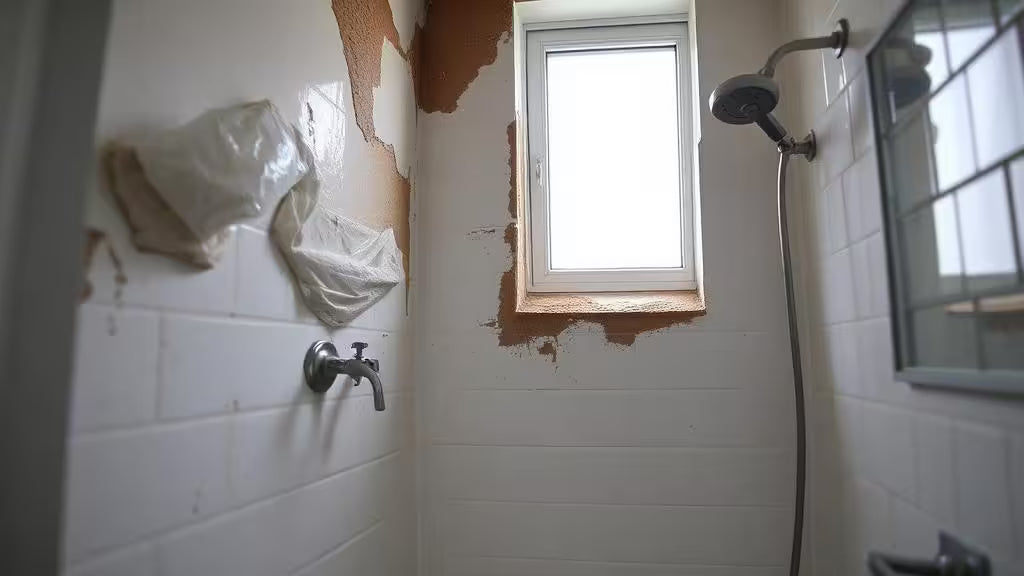
Mold: a structural and surface problem. Mold grows on surfaces: walls, ceilings, grout, window seals, behind appliances, and inside air conditioning systems. Mold spores become airborne when a colony is disturbed or when conditions shift, but the colony itself is anchored to the surface. An air purifier that catches mold spores floating through a room does nothing about the colony producing them. Getting rid of the spores only causes new ones to appear. The source continues growing. Effective mold management requires treating surfaces, not just filtering air.
Pet dander: a furniture and fabric problem. Pet dander, the tiny flecks of skin shed by cats, dogs, and other animals, is extremely sticky. It binds to fabric, furniture, clothing, and bedding, where it can remain for months. While dander does become briefly airborne, most of it lives on surfaces. Studies show that pet allergen levels in homes remain high even months after a pet has left the premises entirely, because the allergen is embedded in furniture and fabrics rather than floating in the air. A HEPA filter won't reach it there.
The 1% Problem
"An air purifier treats roughly 1% of allergens that happen to be airborne at any moment. The other 99% are on your surfaces, where the problem starts, and where treatment needs to happen.
This isn't a criticism of air purifiers. HEPA technology is real, effective, and useful for its intended purpose. The issue is a category mismatch: the technology was designed to clean the air, and that's what it does. But most of what makes your home an allergenic environment isn't in the air: it's on every surface you touch, sleep on, and breathe nearby.
Reactive Cleaning vs. Proactive Biology
Most approaches to indoor air quality are reactive. You vacuum when visible dust accumulates. You spray when mold appears. You run the air purifier after the air quality degrades. Each of these responses addresses the symptom, the visible or airborne result, rather than the process that keeps producing it.
There is a fundamentally different approach: biological competition.
How competitive exclusion works. Competitive exclusion is a principle from ecology: when beneficial microorganisms colonize an environment, they consume the organic matter and spatial resources that harmful organisms need to survive. Without those resources, harmful populations can't establish or grow. Applied to your home, this means continuously releasing beneficial Bacillus probiotic strains that settle on every surface, including inside cracks, on textured materials, and in areas that no cleaning product reaches. These probiotics don't just clean: they create a living biological layer that continuously outcompetes mold, dust mite populations, pet dander proteins, and odor-causing bacteria. The key distinction is time: this protection isn't reactive (responding after contamination appears), and it isn't dependent on a fan running. It's continuous, 24 hours a day, on every surface.
What EnviroBiotics Does Differently
EnviroBiotics devices continuously release FDA GRAS-certified Bacillus probiotic strains into the indoor environment. These naturally occurring bacteria settle on every surface, including cracks, crevices, and porous materials where allergens concentrate. They consume the organic matter that mold, dust mites, and odor bacteria depend on. They create an ongoing competitive environment that suppresses harmful organism populations and continue working between cleanings, not just during active treatment.
Every probiotic strain used is EPA-registered, MADE SAFE-certified, and FDA GRAS, meaning it is safe for infants, children, pregnant women, the elderly, and pets. No ozone is produced. No VOCs. No chemical residue of any kind. Independent laboratory testing shows measurable reductions in allergen levels and pathogen populations within 30 days of continuous use.
Do You Have to Choose?
No, and for many households, using both makes sense. A HEPA air purifier excels at removing airborne particles, smoke, and fine particulate matter in real time. If you live near traffic, have respiratory conditions, or want real-time particle monitoring, a HEPA unit is genuinely useful.
But if allergens, dust mites, mold, and pet dander are your primary concern, a HEPA filter alone cannot address the source. EnviroBiotics treats the surfaces where those allergens originate and regenerate, providing the biological foundation that air purification alone can't deliver. The combination is more complete than either approach alone. Compare probiotic vs HEPA in detail.
"Air purification + probiotic surface treatment: clean air above, suppressed allergens below. Complete protection, not just partial.
Frequently Asked Questions
Why does my air purifier not help with my dust mite allergy? Because dust mites live on surfaces, primarily in mattresses, pillows, and carpets, not in the air. A HEPA filter catches mite allergens that briefly become airborne, but does nothing about the mite populations and allergen reservoir living in your bedding and furniture. Treating the surface source is required for meaningful relief.
Does an air purifier remove mold? An air purifier can catch some mold spores floating in the air. It cannot treat mold colonies growing on surfaces, walls, or inside materials. Removing airborne spores without treating the colony means more spores follow. Surface-level treatment is necessary to effectively address mold.
Why do I still have allergies with an air purifier? Most likely because your allergens, dust mites, pet dander, and mold are primarily surface-based, not airborne. Air purifiers are highly effective at cleaning airborne particles, but most of what triggers indoor allergies live on surfaces, furniture, and fabrics that the purifier's filter never reaches.
Are probiotics safe to release into my home? The Bacillus probiotic strains used by EnviroBiotics are FDA GRAS (Generally Recognized as Safe), EPA-registered, and MADE SAFE-certified. They are the same class of beneficial bacteria widely used in food production and probiotic supplements. They produce no ozone, no VOCs, and leave no chemical residue. They are safe for infants, children, pregnant women, elderly individuals, and pets.
How long before I notice a difference? Independent laboratory testing shows measurable reductions in allergen and pathogen levels within 30 days of continuous use. Probiotic surface treatment is cumulative: the beneficial layer builds and becomes more effective over time, rather than degrading like a filter does.
Can I use EnviroBiotics alongside my existing air purifier? Yes, and many users do. Air purification and probiotic surface treatment address different problems, and using both provides more comprehensive protection than either approach alone.


Leave a comment
This site is protected by hCaptcha and the hCaptcha Privacy Policy and Terms of Service apply.